
this soft creature stand-in imagines an alternative way of animal companionship
Designboom · View original source
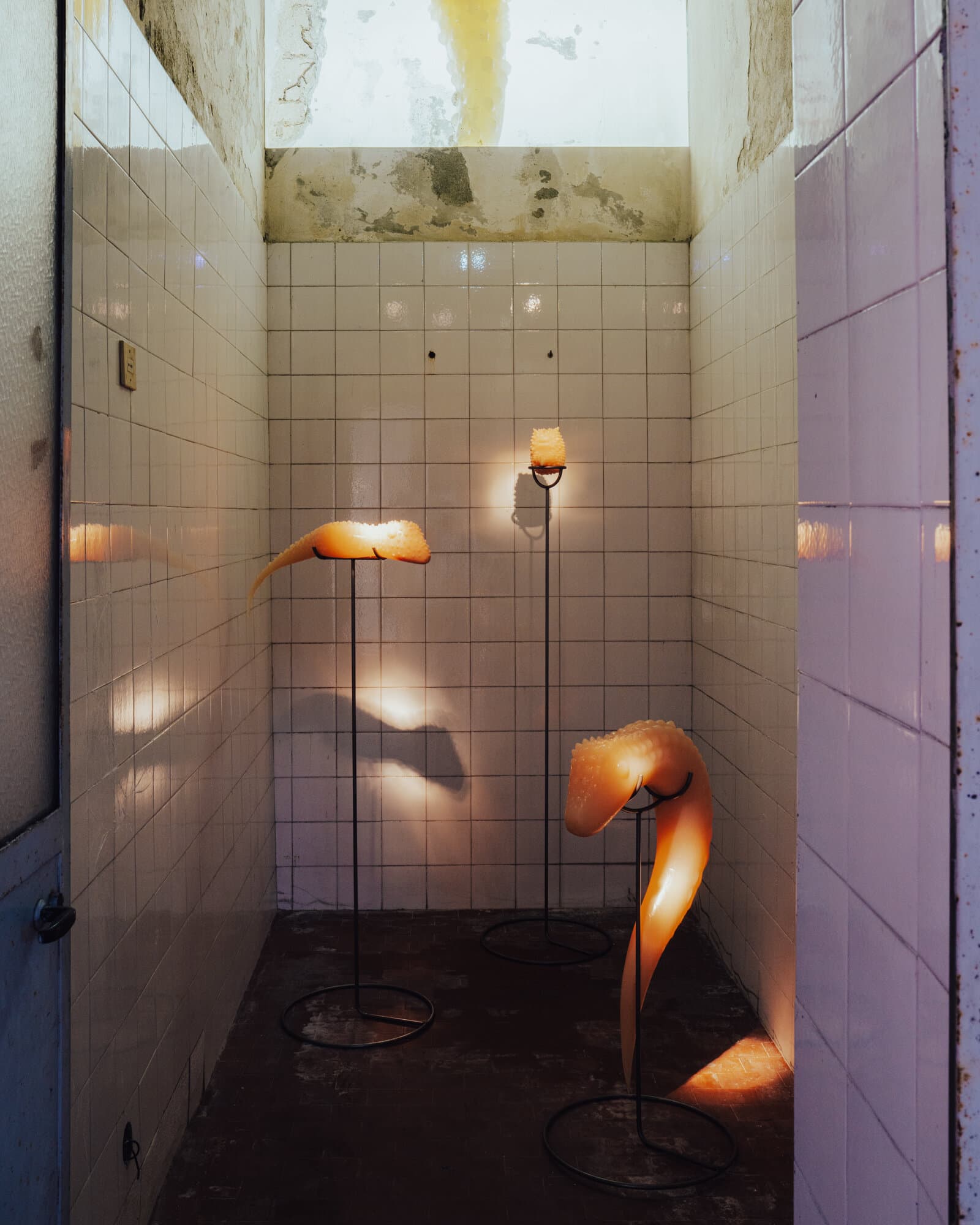
In a unique exhibition at the abandoned Baggio Military Hospital in Milan, three soft, amphibian-like creatures have sparked curiosity and contemplation about the nature of companionship between humans and animals. These near-translucent figures, illuminated by warm overhead lights, are the creation of Jaemo Lee and Lisa Schober, part of their project MEUW (Socius novus). Showcased during Milan Design Week 2026, the work is featured in the HEAD – Genève’s Master in Interior Architecture (MAIA) group show titled "No One Sees Them Like We Do. Notes on Animal Interiors." The exhibition aims to explore the boundaries and instigators of human-animal relationships through innovative design.
The MAIA group show, led by architect Youri Kravtchenko, alongside assistants David Valadomiu Ceballos and Marie Schild, includes six projects that utilize speculative narratives to rethink the relationships between humans, animals, and their environments. Each project, which includes representations of various creatures such as pigeons, dogs, rats, and frogs, seeks to establish a non-anthropocentric paradigm where these beings can thrive, imagine, and dwell in ways that challenge conventional perceptions of companionship.
In an interview with Designboom, Lee and Schober elaborated on the conceptual framework behind their creations. They clarified that their creatures are not pets or robots but rather objects that simulate companionship. The tactile qualities of the pale pink figures—such as their texture, weight, and perceived cuteness—evoke a sense of intimacy. The duo articulates that their work raises critical questions about whether intimacy can be simulated without the dynamics of domination and whether the absence of a living animal can reveal both a desire for connection and a struggle to maintain coexistence with actual living beings.
The Conceptual Foundation
The genesis of the MEUW project stemmed from a critical examination of the reptile pet industry, particularly focusing on the breeding and commodification of leopard geckos. Lee and Schober noted that these animals are often transformed into decorative objects, stripped of their natural behaviors and environments. This observation led them to question the motivations behind human desires for pet ownership, which are frequently based on aesthetic appeal or social status rather than genuine emotional connections.
Key references that shaped their work include Carlo Mollino’s 1964 concept of the "Walking Dragon," which envisioned a non-animal companion that shifted focus from the animal itself to its symbolic role in human life. Additionally, they drew inspiration from David Cronenberg’s film "eXistenZ," particularly the idea of a game pod that serves as a companion, treated almost like a living entity. These references guided Lee and Schober in conceptualizing MEUW as a speculative object that challenges the desire to own and emotionally attach to another form of life.
Audience Engagement and Interaction
During the exhibition, the creators observed a range of reactions from visitors. Initially, many attendees approached the creatures with hesitation, yet their curiosity was palpable. An integral part of the experience was encouraging visitors to touch and interact with the creatures, as the tactile engagement fostered an immediate connection. Regardless of age, individuals instinctively wanted to pet and hold the MEUW figures. This interaction created a dynamic where the movements of the visitors seemed to animate the creatures, reinforcing the illusion of life.
The physicality of the MEUW figures also played a significant role in shaping audience experiences. The largest of the creatures weighs nearly 12 kg, providing a substantial presence that further enhances the sensation of interacting with a living being. The weight and texture contribute to a deeper emotional response, prompting reflections on companionship and the nature of connection.
The Art of Creation
The manufacturing process of the MEUW creatures is as intriguing as their conceptual underpinnings. Made entirely from colored silicone without any internal structure, the figures derive their movement and flexibility solely from the material itself. The creators designed a family of creatures in various sizes and forms, inspired by the diverse bodies of reptiles. Their development involved a combination of sketching, 3D modeling, and the use of tools like Grasshopper and AI.
Custom 3D printed molds were created for each figure, and the final forms were cast by hand using transparent silicone mixed with pigments. The quick-setting nature of the silicone posed a unique challenge, as the creators had only about ten minutes to pour the material into the molds before it hardened. This time-sensitive workflow necessitated extensive experimentation with different textures, hardness levels, and colors, all of which significantly influenced how people interacted with the creatures.
In summary, MEUW (Socius novus) by Jaemo Lee and Lisa Schober not only offers a fresh perspective on companionship but also invites audiences to reflect on the complexities of human-animal relationships. Through their innovative design, they challenge the traditional notions of pet ownership and intimacy, suggesting that connection can exist in various forms, even without the presence of a living being.
Frequently asked questions
- What is MEUW (Socius novus)?
- MEUW (Socius novus) is a project by Jaemo Lee and Lisa Schober that features soft, amphibian-like creatures designed to simulate companionship without being actual pets or robots.
- What inspired the creation of MEUW?
- The project was inspired by a critical observation of the reptile pet industry and the commodification of animals, as well as concepts from design and film that explore non-animal companions.
- How did audiences react to the MEUW creatures?
- Audiences initially approached the creatures with hesitation but were intrigued and engaged, often instinctively wanting to touch and hold them, which created a sense of connection.
Related stories
AI & art news in your inbox, daily
The day's top stories, summarized. Free, no spam, unsubscribe anytime.