
The Power Trap: Why AI’s Energy Demands Risk Undermining American Operations in the Indo-Pacific
Smallwarsjournal.com · View original source
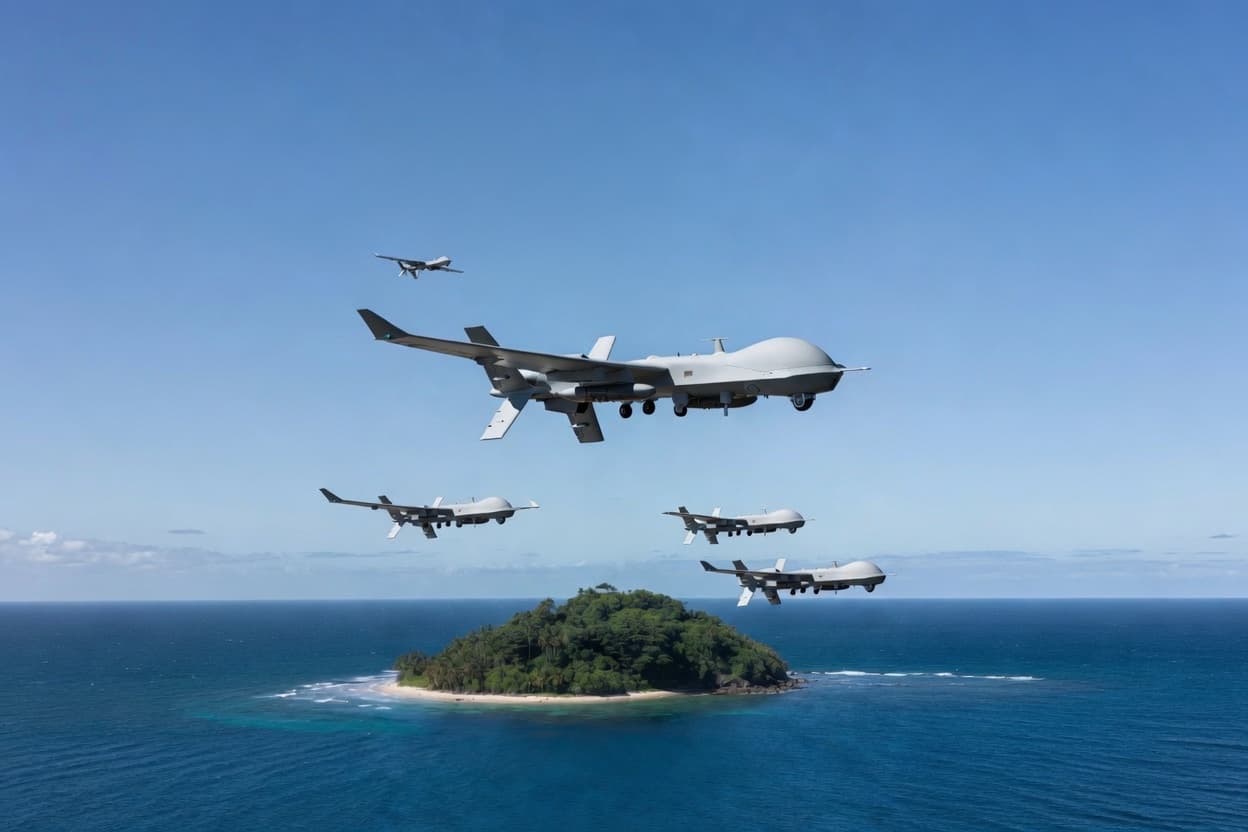
The United States military is facing significant challenges as it rapidly integrates artificial intelligence (AI) into its operations, particularly in the Indo-Pacific region. Despite the potential operational advantages that AI can provide, the infrastructure necessary to support these systems—specifically power, connectivity, and satellite communications—is struggling to keep pace. This disparity poses a risk to the United States' decision-making capabilities in a region that is increasingly contested, especially in light of ongoing US-China competition.
At the tactical edge, AI inference workloads demand substantial power and rely heavily on beyond-line-of-sight communication links. In contested environments, such as those anticipated in the Indo-Pacific, electronic warfare can disrupt these links, forcing military platforms to revert to localized processing. This shift significantly reduces operational endurance and can compromise the effectiveness of AI systems. To address this issue, the military must prioritize energy-resilient satellite communications as a fundamental requirement for warfighting, while also enhancing standards, industrial capacity, and the speed of acquisition processes.
The Energy-Connectivity Gap
The integration of AI into military operations is not uniform; it varies based on the function of the AI, the type of platform being used, and the extent to which these platforms depend on centralized systems for data processing and decision support. This creates distinct categories of AI systems, termed “energy-connectivity regimes,” defined by their power demands and reliance on communication links. Current military concepts often overlook these differences, which can lead to operational vulnerabilities.
As the US military continues to adopt AI technologies, the demands placed on power and connectivity are increasing. Unlike traditional intelligence, surveillance, and reconnaissance (ISR) systems that transmit data in bursts, modern AI requires continuous data processing, resulting in non-linear increases in both computational and bandwidth needs. The Department of Defense (DoD) has recognized this need in its January 2026 Artificial Intelligence Strategy, which aims to accelerate AI integration across all warfighting functions, including projects like Swarm Forge for drone swarms and The Agent Network for decentralized battle management.
Military AI systems can be categorized into three energy-connectivity regimes:
1. Pre-computed or mission-parameterized systems, which have low and predictable power demands.
2. Edge-dominant systems, which necessitate sustained but bounded compute power and have limited bandwidth dependence.
3. Reachback-dependent systems, which require continuous high-bandwidth communication and can quickly degrade when connectivity is lost.
Most current DoD concepts assume a hybrid edge-cloud architecture, where computing tasks are divided between local devices and remote servers based on connectivity needs. However, the existing infrastructure only adequately supports either fully disconnected edge systems or rear-area cloud systems, leaving a critical gap for hybrid architectures that oscillate between the two.
Implications for Military Operations
The implications of this energy-connectivity gap are profound, especially in the Indo-Pacific theater, where vast distances and adversarial capabilities can challenge US military operations. The ability to maintain timely data flows is crucial for coordinated action; without reliable and energy-resilient satellite communications, AI-enabled systems at the tactical edge risk losing their effectiveness. This can lead to slower decision cycles and degraded ISR capabilities, which are vital for operations across the region's island chains.
The risks associated with this mismatch are not merely theoretical. Recent exercises conducted by Indo-Pacific Command have demonstrated that once electronic warfare disrupts communication links, AI systems quickly shift to relying on onboard processing and battery power. This transition can lead to rapid depletion of power reserves for drones and other platforms, forcing operators to make difficult decisions regarding mission continuation or asset loss. In high-intensity scenarios, this degradation could escalate quickly across numerous autonomous platforms, transforming a potential information advantage into a liability.
The issue is exacerbated by the institutional challenges within the military. Traditional acquisition timelines are often lengthy, making it difficult for the DoD to keep pace with the rapid advancements in AI technology. The average timeline for new acquisition programs can approach a decade, and even routine security processes can delay the deployment of new technologies. These bottlenecks hinder the military's ability to operationalize AI tools effectively and in a timely manner.
In contrast, China is adopting a different approach, focusing on energy-efficient hardware-software co-design and lower-bandwidth architectures. This strategy prioritizes the development of energy-efficient edge chips and integrated platforms, which may provide them with an advantage in contested environments where power and connectivity are critical.
The United States must address these challenges to maintain its operational edge in the Indo-Pacific. Failing to do so could undermine not only the effectiveness of AI systems but also the broader strategic objectives in a region where military capabilities are increasingly intertwined with technological advancements.
In conclusion, the integration of AI into military operations offers significant potential benefits, but it is imperative that the US military addresses the existing gaps in power and connectivity infrastructure. Without deliberate policy actions to enhance energy-resilient satellite communications and streamline acquisition processes, the risks associated with these mismatches will continue to grow, potentially jeopardizing the United States' strategic position in the Indo-Pacific region.
Frequently asked questions
- What are the energy-connectivity regimes in military AI?
- Military AI systems can be categorized into three regimes: pre-computed systems with low power demands, edge-dominant systems with bounded power needs, and reachback-dependent systems that require high bandwidth.
- How does electronic warfare affect AI operations?
- Electronic warfare can disrupt communication links, forcing AI systems to rely on onboard processing, which increases power consumption and can lead to rapid depletion of battery reserves.
- What challenges does the US military face in acquiring new AI technologies?
- The US military faces lengthy acquisition timelines and bureaucratic hurdles that delay the deployment of new AI technologies, making it difficult to keep pace with advancements in the field.
Related stories
AI & art news in your inbox, daily
The day's top stories, summarized. Free, no spam, unsubscribe anytime.