
The Edge of Intelligence
Bradenkelley.com · View original source
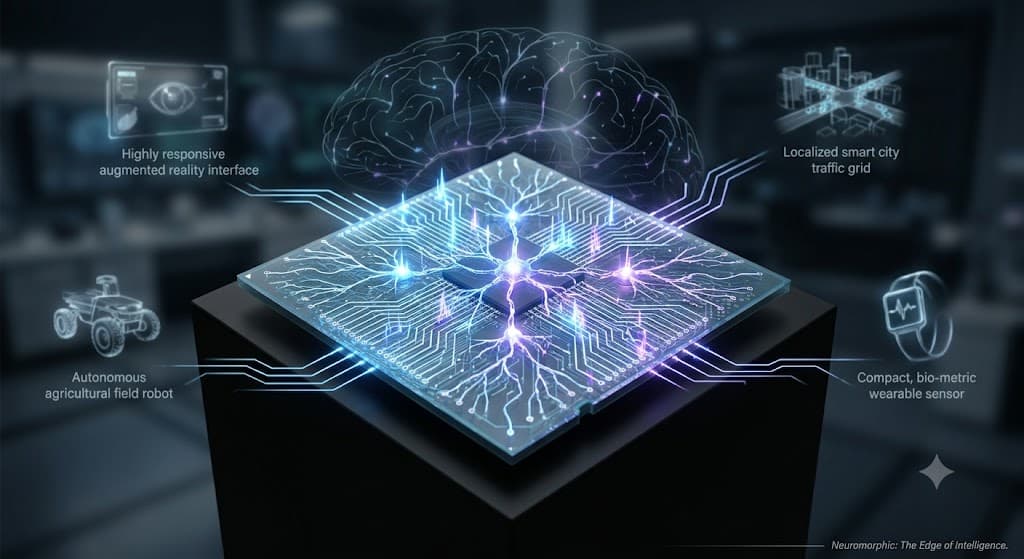
In an era marked by extraordinary advancements in algorithmic capabilities, the landscape of artificial intelligence (AI) is undergoing a significant transformation. Generative AI, large language models, and autonomous agents are not only enhancing organizational agility but also redefining the principles of experience design. However, a critical underlying issue persists: the most sophisticated forms of intelligence are constrained by the limitations of current computing architectures. This analysis delves into the challenges posed by traditional computing methods and explores the potential of neuromorphic engineering to revolutionize AI deployment.
The Limitations of Traditional Computing
At the heart of the issue lies the traditional von Neumann architecture, a computing framework that has dominated the industry for decades. This architecture separates memory and processing units, necessitating constant data movement between them. As AI tasks become increasingly complex, this structural design leads to significant inefficiencies. Chips generate excessive heat and consume vast amounts of energy merely to transfer data, creating a bottleneck that hampers true scalability.
For leaders in innovation and strategy, this presents a formidable challenge. The reliance on centralized computing resources means that every smart device or localized tool is tethered to a high-bandwidth, high-carbon connection to the cloud. This dependency stifles the potential for creating resilient, privacy-focused experiences. To overcome these limitations, there is a pressing need to liberate intelligence from centralized data centers, and neuromorphic engineering emerges as a promising solution.
Neuromorphic Engineering: A Paradigm Shift
Neuromorphic engineering seeks to replicate the efficiency of the human brain, which operates on approximately 20 watts of power while managing complex cognitive tasks. By designing silicon structures that mimic the brain's architecture, this approach aims to break free from the constraints of traditional computing. Unlike standard processors that operate in a binary, sequential manner, neuromorphic systems can process information asynchronously, activating only when data spikes occur. This innovation not only reduces energy consumption but also redefines the parameters of AI deployment.
The implications of this shift are profound. Neuromorphic engineering enables advanced AI agents to perform complex tasks locally on small, distributed devices, drastically reducing the need for massive, energy-intensive data centers. This transition represents a significant scaling catalyst, allowing AI to operate efficiently at the edge of networks rather than relying on centralized cloud infrastructures.
Transforming Human Experiences
The impact of moving intelligence to the edge extends beyond technical specifications; it fundamentally alters human experiences. With neuromorphic computing, we can design tools and environments that are more responsive, resilient, and unobtrusive. For instance, search-and-rescue drones could operate autonomously in remote areas, making critical decisions without needing constant cloud connectivity. This capability enhances operational resilience in scenarios where traditional systems would fail due to network dependency.
Similarly, the architecture allows for the redesign of urban infrastructures. Smart city frameworks can shift away from centralized surveillance models, enabling local processing of data to enhance public safety and efficiency. Traffic signals and safety systems can react to environmental changes in real-time, preserving citizen anonymity by discarding raw footage locally.
Furthermore, the next generation of consumer devices, medical technology, and wearables can seamlessly integrate into daily life, reducing the need for constant attention and invasive data sharing. With neuromorphic architecture, devices can maintain contextual awareness while consuming minimal power, offering personalized experiences without draining batteries or compromising privacy.
Implications for Creators and Technologists
As neuromorphic engineering transitions from academic research to commercial application, it presents both opportunities and challenges for creators and technologists. The shift away from centralized computing requires a reevaluation of digital transformation strategies. Organizations must assess their reliance on cloud-dependent architectures and pivot investments toward distributed systems that operate sustainably.
This transformation necessitates a change in design philosophy, moving from active engagement models to ambient, peripheral support systems. The goal is to create environments where technology anticipates user needs and resolves issues quietly, minimizing cognitive load. To effectively leverage this technology, organizations must also bridge the gaps between hardware design, software engineering, and customer experience, fostering new competencies in event-driven programming and decentralized systems.
In conclusion, neuromorphic engineering is not merely a technical upgrade; it represents a foundational shift towards a future where intelligence is a ubiquitous and sustainable utility. By breaking the constraints of traditional computing architectures, we can create a society that is not only more resilient but also profoundly impactful. As we embrace this new paradigm, the challenge for innovation leaders is clear: to prepare for a future where AI is seamlessly integrated into the fabric of daily life, enhancing human potential while respecting the ecological limits of our planet.
Frequently asked questions
- What is neuromorphic engineering?
- Neuromorphic engineering is a computing approach that mimics the architecture and functioning of the human brain to improve efficiency and reduce energy consumption.
- How does neuromorphic computing differ from traditional computing?
- Unlike traditional computing, which relies on a separate memory and processing unit, neuromorphic computing co-locates these functions, allowing for asynchronous processing and significantly lower power usage.
- What are the potential applications of neuromorphic engineering?
- Potential applications include autonomous systems for search-and-rescue operations, privacy-focused smart city infrastructure, and consumer devices that adapt to user behavior without draining battery life.
Related stories
AI & art news in your inbox, daily
The day's top stories, summarized. Free, no spam, unsubscribe anytime.