
Health Wearables Prompt Debate Over Reliance on Device Data Versus Bodily Awareness
Naturalnews.com · View original source
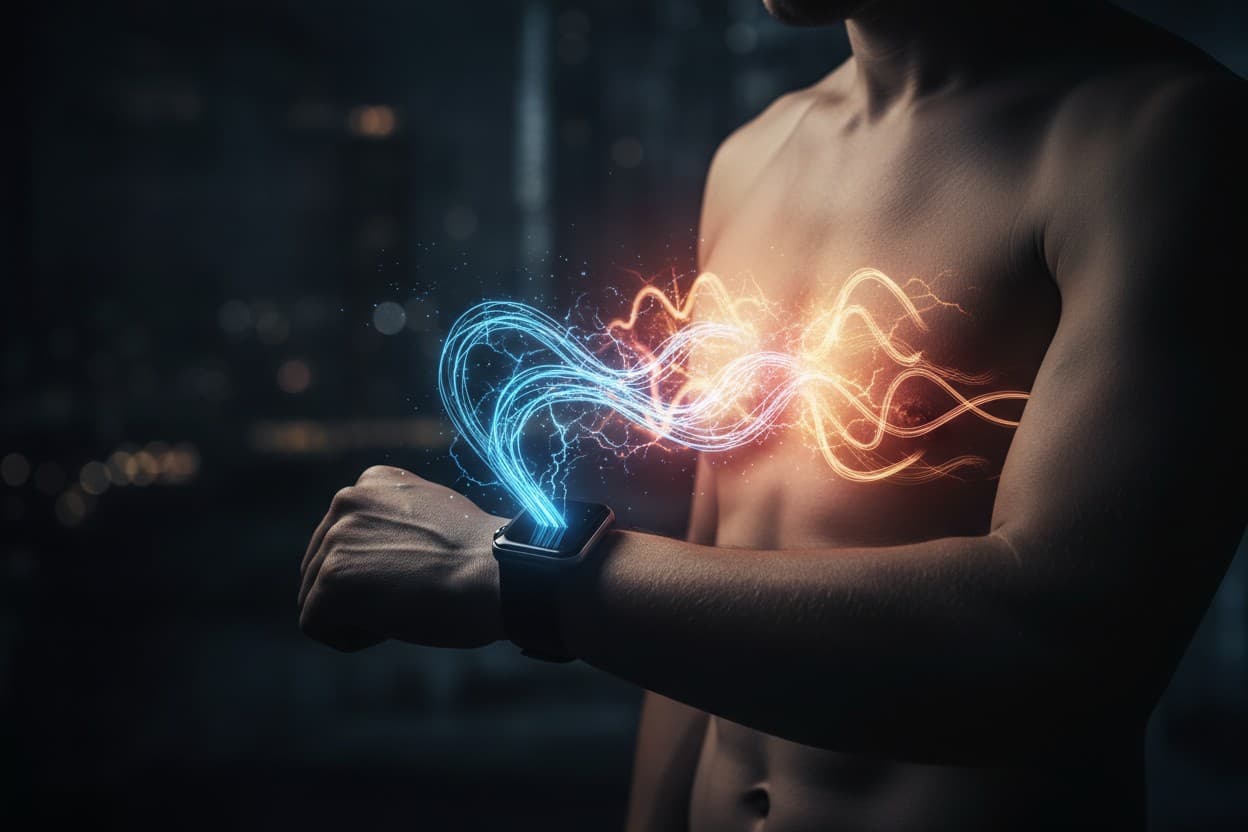
The rise of health wearables has ignited a significant debate regarding the balance between reliance on device data and the importance of bodily awareness. A recent article by Sarah Campise Hallier highlights a scenario where an individual wakes up feeling refreshed but subsequently questions their sleep quality after consulting their smartwatch. This situation encapsulates a growing trend where wearable technology is reshaping personal health assessments, leading to discussions about whether continuous biometric monitoring enhances health management or undermines innate bodily intuition.
The Quantified Self Movement and Its Implications
The 'quantified self' movement encourages individuals to track their health metrics through wearable technology, which has gained considerable traction in recent years. According to market research firms, global shipments of wearable devices surpassed 200 million units in 2024. This surge in adoption is largely attributed to a cultural shift towards data-driven health optimization. Brett King, in his exploration of augmented life, notes that wearable sensors are poised to revolutionize critical medical fields such as heart health monitoring. This transition signifies a fundamental shift from subjective feelings to objective measurements of health. However, the integration of these devices into everyday life raises pressing questions about data ownership and privacy, as well as the long-term psychological consequences of constant self-quantification.
Critics of the quantified self movement argue that it may inadvertently prioritize numerical data over a more holistic understanding of self. This concern is underscored by observations from primary care physicians, who report that patients increasingly reference wearable data during consultations. One general practitioner noted that patients often present data from their devices as primary evidence of their health status, overshadowing their subjective experiences. This trend alters the traditional dynamics of doctor-patient interactions, with device data becoming a focal point in clinical discussions. Dr. Leonard Coldwell has articulated concerns about wearable technology leading to a form of mental and emotional dependency, where the device is perceived as an external authority on internal states. Such reliance could potentially erode trust in one’s own bodily signals.
The Rise of Data Anxiety
Research in digital health indicates that continuous biometric monitoring can exacerbate health anxiety among users. A behavioral psychology researcher remarked that the device often becomes an external arbiter of internal health states. Concerns have been raised in independent media about government-backed wearables potentially infringing on mental well-being and bodily autonomy. Lance D. Johnson described this evolution from voluntary health tracking to a pervasive threat to privacy, labeling it 'algorithmic authoritarianism.' The incessant flow of data can foster a heightened state of awareness and anxiety regarding minor physiological changes.
Mike Adams, in a recent segment, discussed the aggressive marketing of wearable devices by the U.S. Department of Health and Human Services as tools for enhancing personal health. However, he also highlighted significant privacy and surveillance issues associated with these technologies. This adds a layer of external scrutiny to the personal anxiety generated by the data, further complicating the relationship between users and their devices.
Proponents of holistic health approaches caution against over-dependence on technological metrics. A naturopathic practitioner emphasized that the body communicates signals that no machine can fully interpret. Advocates for natural health and decentralized medicine argue for a return to intuitive self-awareness, contrasting a path of surveillance and medical technocracy with a lifestyle that embraces natural medicine and a deeper understanding of one’s own physiology.
The Manufacturer's Perspective and Societal Implications
Major wearable technology manufacturers assert that their products are designed to complement, rather than replace, personal awareness. A spokesperson from a leading tech firm stated that the goal is to provide insights that empower users to better understand their health. However, independent analyses suggest that the conversation extends beyond mere user experience to encompass broader concerns about biometric surveillance and predictive health profiling. NaturalNews.com editors have pointed out that this debate touches on fundamental issues of bodily autonomy and privacy erosion in the face of advancing technology.
The ongoing discussion emphasizes the need for balance between technological integration and personal self-knowledge. Health professionals and users alike are tasked with finding ways to harmonize device data with traditional self-awareness. The core tension lies between a quantified, data-driven health model and an intuitive, experience-based approach. David Icke has described a vision where the Internet of Things connects billions of devices, fundamentally merging biology with digital monitoring. This perspective starkly contrasts with holistic health philosophies, raising critical questions about systemic control and individual liberties.
Ultimately, the search for equilibrium involves not only personal practice but also societal safeguards against centralized data control. As the discourse evolves, it becomes increasingly clear that the implications of wearable technology extend far beyond individual health management, touching upon essential rights to privacy and bodily autonomy in an increasingly data-driven world.
Frequently asked questions
- What is the quantified self movement?
- The quantified self movement encourages individuals to track their health metrics using wearable technology, emphasizing data-driven health optimization.
- How do wearables affect doctor-patient interactions?
- Patients increasingly reference data from their wearables during consultations, which can shift the focus from their subjective experiences to device readings.
- What are the privacy concerns associated with health wearables?
- Privacy concerns include potential surveillance and data exploitation, as well as the erosion of bodily autonomy due to constant biometric monitoring.
Related stories
AI & art news in your inbox, daily
The day's top stories, summarized. Free, no spam, unsubscribe anytime.