
BMW’s Figure 03 Humanoid Robot Could Change Factory Logistics Forever
Bitrebels.com · View original source
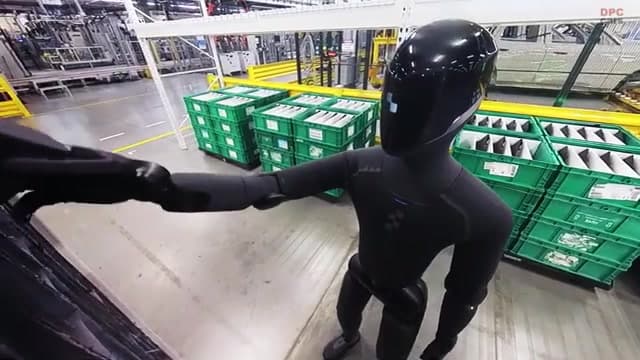
BMW has taken a significant step in the evolution of robotics within the automotive manufacturing sector by deploying its Figure 03 humanoid robot in the often-overlooked area of parts logistics. This innovative robot, developed in collaboration with Figure AI, is not being utilized for traditional tasks such as welding or assembly; rather, it is designed to manage the complex and time-sensitive flow of components that are essential for keeping assembly lines operational.
The importance of this initiative extends beyond the mere ability of a robot to lift or place parts. BMW's decision to test humanoid robots in tasks that require human-like ergonomics, effective communication, and tactile precision marks a pivotal shift in how such technologies are perceived by factory managers and the workforce. This approach emphasizes collaboration rather than replacement, with BMW positioning Figure 03 as an intelligent partner for repetitive tasks that are physically demanding, allowing human workers to concentrate on higher-level responsibilities that necessitate critical thinking and experience.
The Role of Figure 03 in Manufacturing
Prior to the introduction of Figure 03, BMW had already seen success with its predecessor, Figure 02, which supported the production of over 30,000 BMW X3 SUVs over a ten-month period at Plant Spartanburg. This pilot program established a practical foundation for the expectations surrounding humanoid robots in manufacturing, shifting the focus from theoretical capabilities to real-world applications.
The effectiveness of Figure 03 will largely depend on its ability to navigate the intricate logistics of manufacturing, including sequencing, timing, and safe interaction with human workers. These factors are critical, as any misstep in the logistics chain can lead to costly delays that ripple through the production line. By assigning Figure 03 to manage sequencing trolleys, BMW is exploring the potential of humanoids to excel in roles that demand speed, consistency, and spatial awareness.
The advancements in Figure 03's design include softer exterior panels that enhance safety during human interaction, wireless charging capabilities to minimize manual battery changes, and hands equipped with tactile sensors and palm cameras that improve object awareness. While these technical enhancements may seem incremental, they fundamentally expand the robot's operational capabilities. For instance, tactile sensors enable the robot to gauge grip strength, which is crucial when handling parts that vary in weight or texture. The integration of palm cameras allows for close-range visual adjustments, enhancing the robot's ability to perform tasks accurately in real-time.
Evaluating the Benefits and Challenges
The deployment of humanoid robots like Figure 03 in logistics tasks presents several advantages, particularly in their adaptability to handle irregular containers and last-minute changes. This flexibility can significantly reduce idle time across shifts, a crucial factor in high-volume manufacturing environments. The previous pilot with Figure 02 demonstrated that humanoid robots can meet the demands for speed and consistency when properly integrated into production workflows.
However, the introduction of humanoid robots is not without challenges. The economic viability of deploying such systems must be carefully considered, as the costs associated with humanoid robots can reach hundreds of thousands of dollars when factoring in hardware, integration, safety systems, and ongoing maintenance. This places the decision to implement humanoid robots at a crossroads where the volume of production and variability of tasks must justify the investment.
Moreover, the integration timeline for humanoid robots often spans several months, as evidenced by the ten-month pilot of Figure 02. This extended period for tuning and training emphasizes the need for thorough real-world testing to ensure that the robots can operate effectively within existing workflows. The use of virtual simulations can aid in this process, but physical adjustments remain essential for achieving optimal performance.
In comparing humanoid robots to purpose-built automation, the choice depends on several factors, including task variability, ergonomic considerations, and production scale. While fixed automation solutions may be more cost-effective for high-volume tasks with minimal variability, humanoid robots offer the flexibility needed in environments where parts frequently change or where human interaction is necessary.
Why it matters
The introduction of Figure 03 into BMW's manufacturing process represents a significant advancement in the integration of robotics and human labor. By focusing on reducing ergonomic strain and enhancing logistical efficiency, BMW is not just testing a new robot; it is exploring a new paradigm in manufacturing where technology and human workers coexist more harmoniously. As the industry continues to evolve, the success of Figure 03 could pave the way for broader adoption of humanoid robots in various manufacturing sectors, particularly those facing high variability and ergonomic challenges.
Ultimately, the effectiveness of Figure 03 will be measured not just by its ability to perform tasks but by its capacity to alleviate the invisible friction that can disrupt production flows. Addressing these challenges could lead to significant improvements in efficiency, safety, and worker satisfaction in the manufacturing landscape.
Frequently asked questions
- What is Figure 03?
- Figure 03 is a humanoid logistics robot deployed by BMW for parts sequencing and human-robot coordination in factory logistics.
- How does Figure 03 improve parts sequencing?
- It improves sequencing by using vision, tactile feedback, and adaptable hands to handle irregular bins and last-minute substitutions.
- Is Figure 03 safe to work alongside humans?
- Safety is addressed through soft exteriors and proximity sensing, but careful workflow design and communication protocols are still essential.
Related stories
AI & art news in your inbox, daily
The day's top stories, summarized. Free, no spam, unsubscribe anytime.